
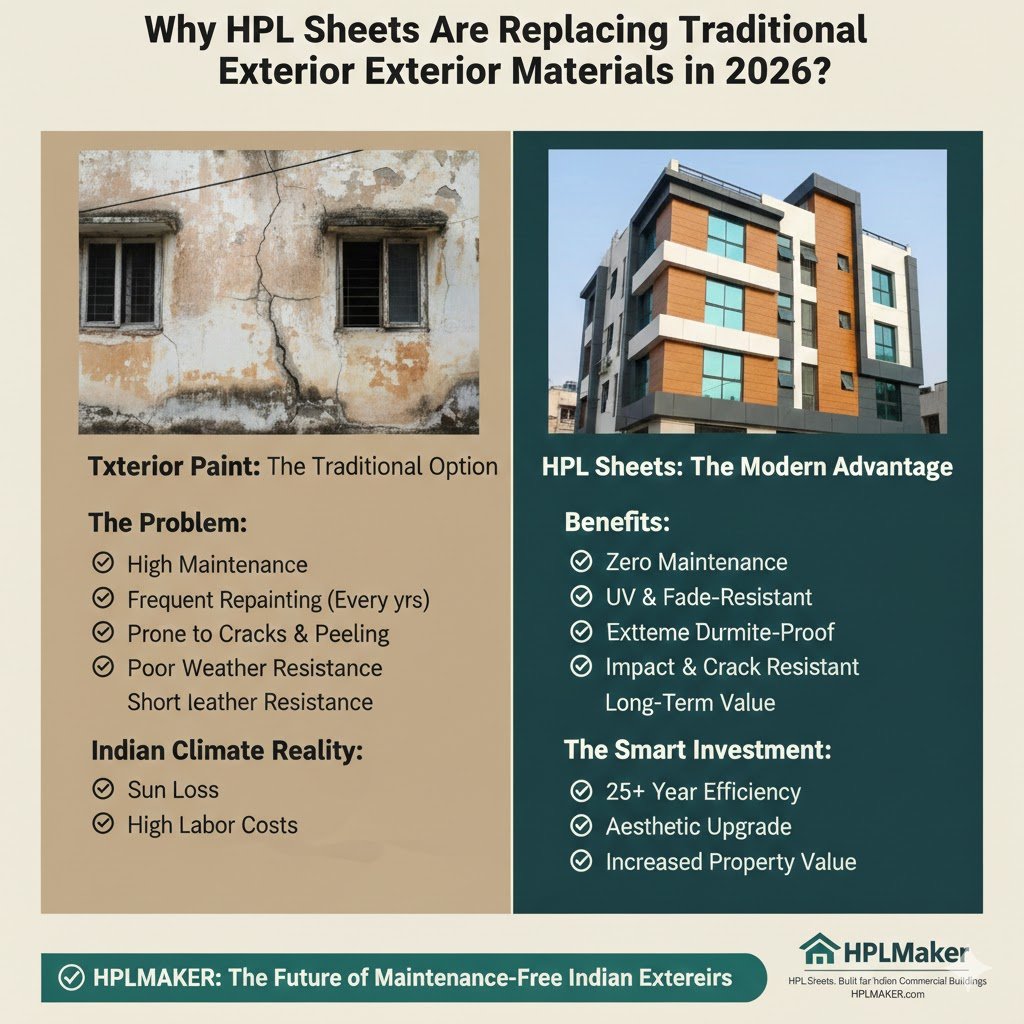
Exterior design trends in 2026 are no longer driven by looks alone. Performance, longevity, and maintenance costs are now deciding factors. This shift is the reason HPL sheets are rapidly replacing traditional exterior materials like paint, cement plaster, and ceramic tiles.
Let’s understand why this transition is happening worldwide.
Changing Expectations from Building Exteriors
Earlier, exterior materials were chosen mainly for:
- Initial appearance
- Lower upfront cost
Today, builders and homeowners expect:
- Long-lasting finish
- Minimal maintenance
- Resistance to extreme climate
- Premium architectural appeal
Traditional materials struggle to meet these expectations consistently.
Limitations of Traditional Exterior Materials
Exterior Paint
- Fades due to sunlight
- Requires repainting every few years
- Cracks in humidity and rain
Cement Plaster
- Develops cracks over time
- Absorbs moisture
- Needs frequent repairs
Exterior Tiles
- Risk of falling or cracking
- Grout maintenance issues
- Limited design flexibility
These challenges increase long-term ownership cost.
What Makes HPL Sheets a Modern Alternative?
HPL (High Pressure Laminate) sheets are engineered exterior panels manufactured under high pressure and temperature, making them exceptionally durable.
They are designed specifically to solve the problems traditional materials face.
Superior Weather Resistance
HPL sheets:
- Resist UV radiation
- Perform well in heavy rainfall
- Do not absorb moisture easily
This makes them suitable for all Indian climate zones and global export markets.
Low Maintenance Advantage
One of the biggest reasons for adoption:
- No repainting required
- No polishing or sealing
- Simple water-based cleaning
This drastically reduces maintenance expenses over the years.
Consistent Appearance for Years
Unlike paint or plaster, HPL sheets:
- Maintain uniform color
- Do not develop patchy surfaces
- Preserve facade aesthetics long-term
This is critical for apartments, villas, and commercial buildings.
Design Freedom for Modern Architecture
HPL sheets offer:
- Wood, stone, and solid color finishes
- Large panel formats
- Clean, contemporary elevations
Architects prefer materials that allow creative expression without structural compromises.
Faster Construction & Renovation
HPL sheets use dry cladding systems which:
- Reduce construction time
- Allow installation over existing surfaces
- Minimize site disruption
This is ideal for renovation and retrofit projects.
Long-Term Cost Efficiency
Although traditional materials appear cheaper initially:
- Repainting and repairs add recurring costs
HPL sheets provide:
- Higher upfront value
- Lower lifecycle cost
- Better return on investment
This makes them financially smarter in the long run.
Why Builders Are Switching to Trusted Brands
Quality matters in exterior applications.
Manufacturers like HPLMaker focus on:
- Exterior-grade HPL technology
- Consistent panel quality
- Finishes suited for modern architecture
This ensures reliable performance across projects.
Final Thoughts: The Future of Exterior Finishes
In 2026, exterior materials must deliver:
- Durability
- Low maintenance
- Premium appearance
- Long-term value
HPL sheets meet all these needs, which is why they are replacing traditional exterior materials across residential and commercial projects.